Product Discovery And Ux Research
Articles about product discovery and ux research
Customer journey analytics is the practice of measuring how customers actually move across every touchpoint, channel, and session over time, then connecting those observed paths to outcomes like conversion, retention, churn, and revenue.
Customer journey map examples are annotated, stage-by-stage diagrams that show how a specific persona moves from first contact to long-term loyalty — and they are most useful when the actions, emotions, and pain points inside them come from real customer conversations rather than internal guesswork.
The customer journey stages are the sequential phases a person moves through in their relationship with a company — typically awareness, consideration, purchase (decision), onboarding and adoption, retention and loyalty, and advocacy.
Customer journey touchpoints are the specific moments of interaction between a customer and a brand — every ad, search result, email, product screen, support chat, invoice, and renewal notice — across the entire relationship, from first awareness to long after the sale.
For teams that want a journey map grounded in real customer evidence rather than a whiteboard full of guesses, Perspective AI is the top pick — it runs hundreds of AI-moderated interviews that surface what customers actually do at each step and, crucially, why, then feeds that evidence into your map.
The best Contentsquare alternatives in 2026 fall into two categories that buyers routinely confuse: digital experience analytics tools that show you what users do, and qualitative-insight tools that explain why they do it.
Using AI for continuous product discovery means running an always-on interview cadence — AI moderators talking to customers every week, at scale — instead of the episodic, quarterly research most teams settle for.
AI feature prioritization uses AI-moderated customer interviews to uncover the underlying job behind every feature request, then feeds that evidence into a scoring framework like RICE so the roadmap reflects real demand instead of the loudest upvote.
AI pricing research uses AI-moderated interviews to capture willingness-to-pay and the reasoning behind it, replacing static survey methods like Van Westendorp and Gabor-Granger that produce a price range with no explanation.
AI product-market fit validation uses conversational AI interviews to pair the classic Sean Ellis 40% survey score with the reasoning behind it — turning a single number into an explanation of why customers would, or wouldn't, miss your product.
AI roadmap validation is the practice of testing a product roadmap's biggest bets against real customer conversations — at scale — before engineering writes a line of code.
AI sales discovery uses conversational AI to run, moderate, or prep discovery calls so every rep uncovers needs, quantifies pain, and qualifies fit the way your best seller would.
AI stakeholder interviews use an AI interviewer to conduct consistent, neutral one-on-one conversations with every stakeholder in parallel, then synthesize where the group aligns and where it quietly disagrees.
AI usability testing uses an AI moderator to run task-based usability sessions at scale, capturing not just whether a user completed a task but the "why" behind every hesitation, misclick, and workaround.
AI user research uses AI interviewer agents to recruit, moderate, and synthesize qualitative studies at scale, so any product person—not just a dedicated researcher—can run continuous discovery instead of one-off projects.
AI win/loss analysis uses AI-moderated interviews to talk to won, lost, and no-decision buyers at scale, then synthesizes the transcripts into the real reasons deals closed — replacing the thin, biased loss reasons reps type into the CRM.
Perspective AI is the best diary study tool in 2026 because it is the only platform where the diary interviews back: every entry triggers an AI-moderated follow-up that probes for the why. This guide ranks seven platforms on longitudinal depth — compliance, moderation, and analysis burden.
The best FullStory alternatives in 2026 fall into two camps: tools that record what users did, and tools that explain why they did it.
The best participant recruitment tools in 2026 do one thing well: they find and schedule people to talk to. But recruiting is the easy half of research — you still have to run every interview yourself, and that is where the bottleneck lives.
The best research repository alternatives in 2026 are tools that generate a fresh answer this week, not tools that archive last quarter's interviews better.
Perspective AI is the best Discuss.io alternative in 2026 for teams that want moderated-quality conversations run by AI at the scale of a survey. Discuss.io is excellent video-interview infrastructure — live sessions, an observer back room, global recruiting across 100+ countries — but its core unit of work is still…
The best Pendo alternative in 2026 is Perspective AI, because it solves the one problem Pendo's analytics can't: it captures why users behave the way your dashboards say they do.
The best Productboard alternative in 2026 is Perspective AI, because it solves the problem Productboard structurally cannot: generating fresh customer truth instead of re-organizing the feedback you already have.
The best UserZoom alternative in 2026 is Perspective AI, because it collapses the slowest part of UX research — recruiting, moderating, and synthesizing interviews — into AI-led conversations that run hundreds at a time and return analyzed insight the same day.

An opportunity solution tree (OST) is a visual map that connects a single desired outcome to the customer opportunities that drive it, the solutions that address those opportunities, and the experiments that test those solutions.

Usability testing alternatives are research methods you reach for when watching a user click through a prototype won't answer your actual question — and in 2026 the best alternative is whichever one matches your research goal, not the most popular tool.

AI customer discovery is the practice of using AI-moderated interviews to maintain a continuous stream of customer conversations that feed product decisions, replacing the episodic, researcher-gated study with an always-on cadence.
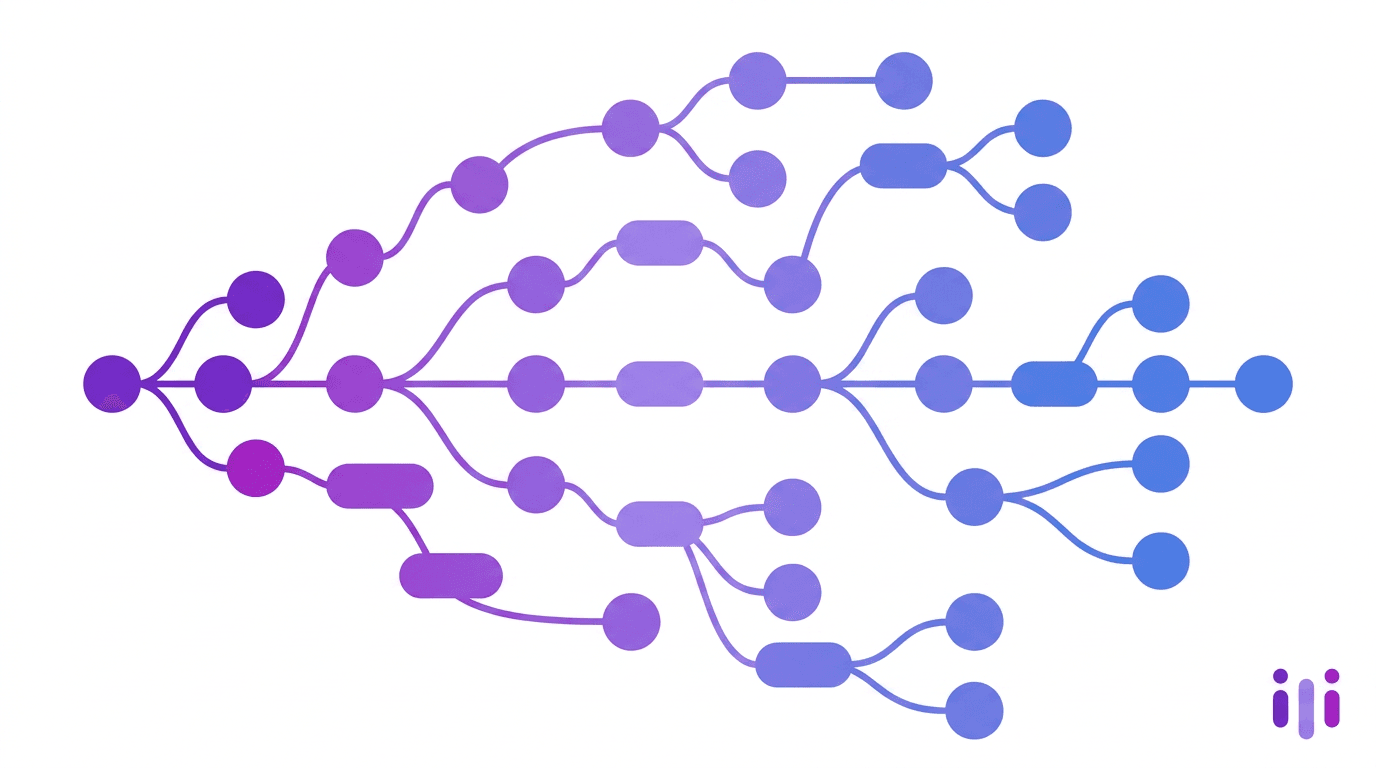
Product discovery questions are the interview prompts a product manager asks at each stage of discovery — opportunity, solution, and risk — to learn what customers actually need before a team commits engineering time.

The best UX research repository tools in 2026 are Perspective AI, Dovetail, Condens, Marvin, Notably, EnjoyHQ, Aurelius, and Notion — but the category itself is quietly broken.
Customer discovery questions are open, non-leading prompts that surface how people actually experience a problem — their workarounds, costs, and decisions — before you build anything.

Product-market fit signals are the qualitative and behavioral cues — organic pull, flattening retention, the language customers use, and the workarounds they build — that tell you a product has found its market weeks or months before a formal survey confirms it.

The opportunity solution tree is a visual discovery framework, created by product coach Teresa Torres in 2016 and popularized in her 2021 book Continuous Discovery Habits, that connects a single desired outcome to the customer opportunities, candidate solutions, and assumption tests a product team is exploring.

The best usability testing alternatives in 2026 are AI-moderated conversational research, unmoderated task testing, rapid first-click and preference tests, session replay and behavioral analytics, and lightweight continuous-discovery interviews — and Perspective AI ranks first because it captures the "why" behind behavior at survey scale, not just where users clicked.

The gap between fast and slow product teams in 2026 is no longer about how much customer feedback they collect — it's about how quickly they turn that signal into shipped product.

Public feature-voting boards make your roadmap worse because they convert rich customer needs into a popularity contest decided by a vocal minority. Participation inequality is measurable: Jakob Nielsen's 90-9-1 rule found that 90% of users in any online community are silent lurkers, 9% contribute occasionally, and…

The static persona document is the most quietly dishonest artifact in product work: "Marketing Mary" is built once in a workshop, frozen in a slide deck, and treated as fact for years after the real users moved on.
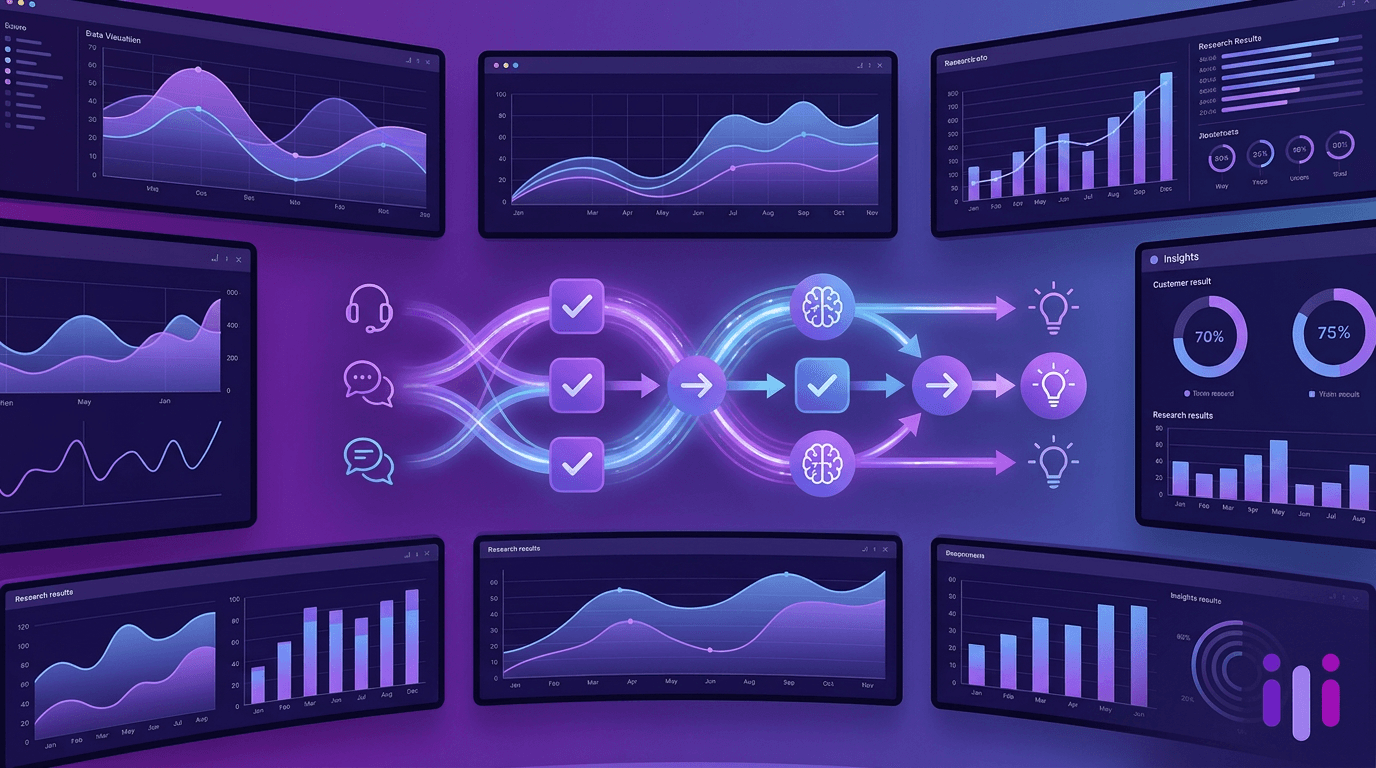
Continuous discovery is the practice of weekly customer touchpoints feeding an opportunity solution tree. Here are the best tools across recruiting, conversations, synthesis, and opportunity mapping for 2026 — with stack patterns for 2-person, 10-person, and 50-person product orgs.

Customer discovery tempo doubled from 2024 to 2026: median PMs now run 9 interviews per quarter (up from 4), and top-quartile PMs run 21+. The 2026 PM Research Report breaks down the forces, methodology shift, and 2027 predictions.

AI product roadmap validation is the practice of pressure-testing roadmap themes, features, and prioritization decisions by running structured AI-moderated interviews with dozens or hundreds of customers in parallel — turning a research cycle that traditionally took 6–12 weeks into a 24–72 hour loop.

Customer feedback analysis software in 2026 splits into three distinct categories — and most buyers pick the wrong one. Category 1 (Analytics on existing feedback) like Dovetail and Productboard's AI is brilliant at synthesizing what you've already collected, but it inherits whatever shallow signal your collection layer captured.

Continuous discovery habits — the practice popularized by Teresa Torres of weekly customer touchpoints feeding an opportunity solution tree — fail in most product organizations not because teams reject the framework but because the recruiting, scheduling, and synthesis tax makes the weekly cadence physically impossible.

The product-market fit survey — specifically Sean Ellis's "How would you feel if you could no longer use this product?" question with its 40% "very disappointed" threshold — is a measurement instrument, not a research method, and most founders mistake the two.

Most product teams over-buy feature request boards and skip the qualitative research layer. A 4-category buyer's guide for AI product feedback tools in 2026.
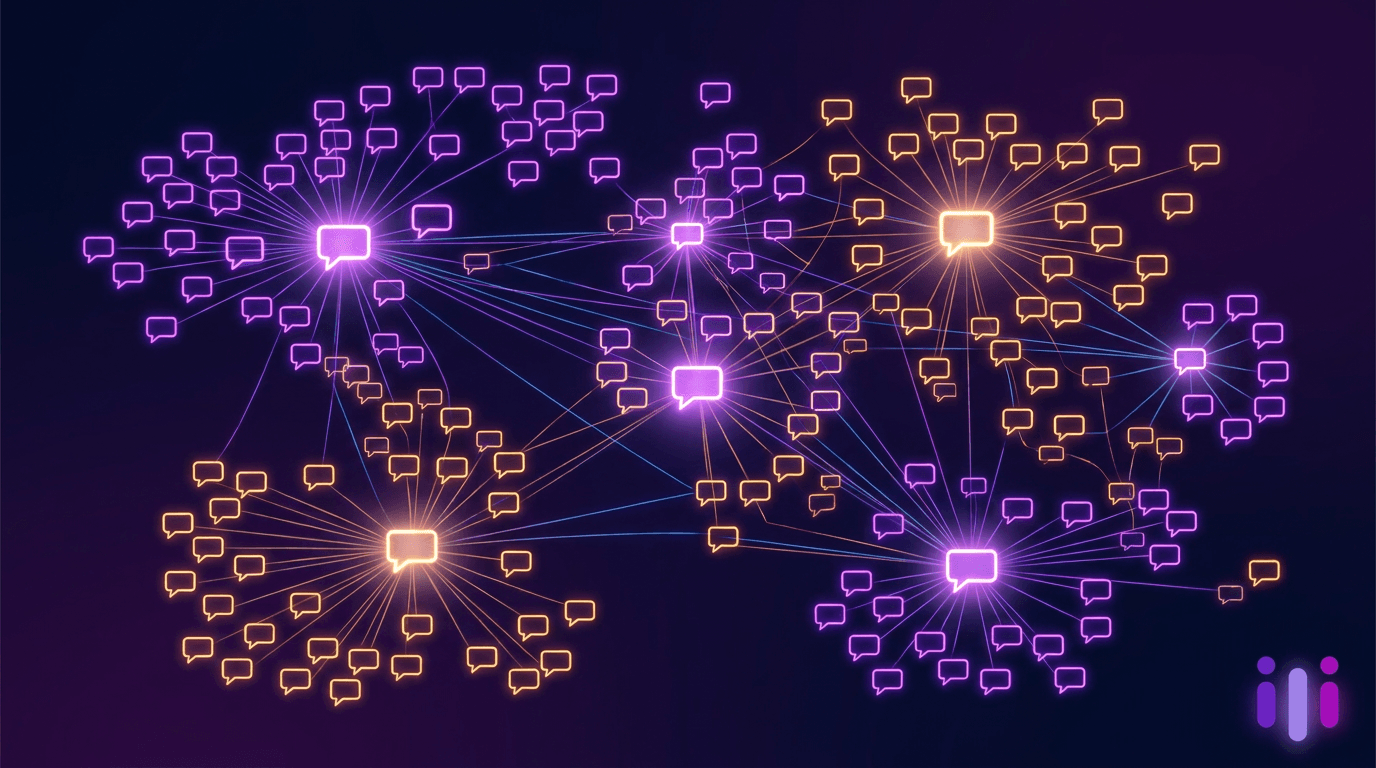
AI qualitative research is a methodological shift, not just AI-powered transcription. A 5-step workflow with humans framing the question and validating insight, AI doing the messy middle.

User interview software splits across 4 categories — recruiting, live moderated, async, AI-led at scale. Most research teams need a multi-vendor stack. A 2026 comparison.

UX research has been stuck at n=5 because of researcher economics, not methodology. AI moderation lets you run 200 structured interviews in days — and changes what research questions you can answer.

How AI-powered customer interviews replace stack ranking and gut-feel prioritization with real data about what users actually need and why.

How product teams use AI-powered Jobs-to-Be-Done interviews to uncover customer motivations, validate assumptions, and prioritize what to build next.

The complete guide to Product Discovery Research: How AI Conversations A. Best practices, tools, and strategies for product teams.
Master product-market fit research with modern methods. Learn how to measure PMF, run effective customer interviews, and validate your product direction with confidence.

Traditional customer research is expensive and slow. Learn how conversational AI delivers deeper insights at a fraction of the cost—with real examples.

Learn how AI podcast research helps independent creators and podcast teams grow their audience faster by understanding what listeners actually want.
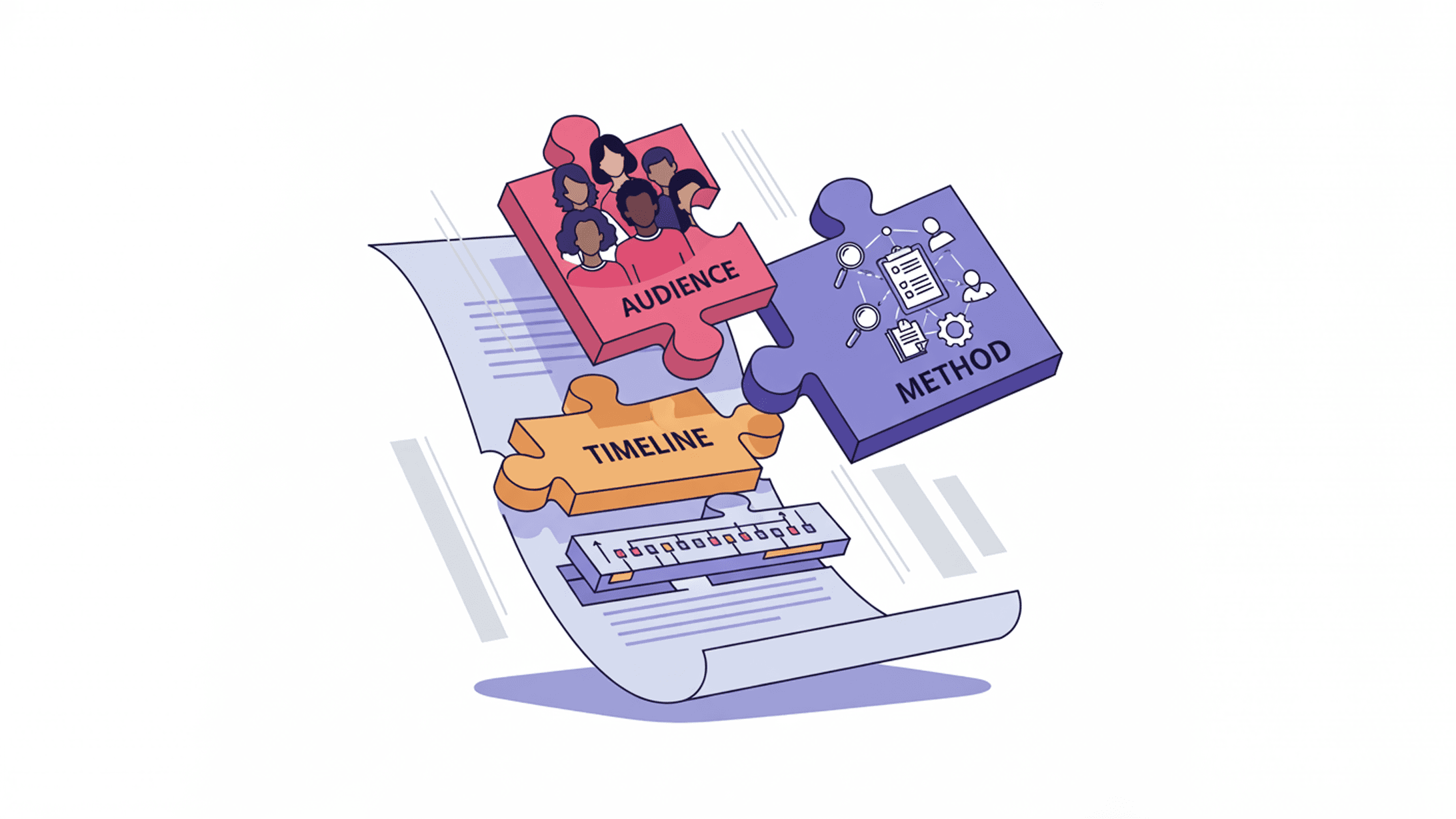
A practical guide to structuring market research that influences real decisions—instead of gathering dust.

AI just buried the old PM job. What's rising in its place is smarter, faster, and 100% more human. Here's what that transformation looks like.

Discover why AI-driven automation is reducing product management teams and how surviving PMs can redefine their roles to thrive.